Roman Food & Traditions
Carbonara, the Roman Way
Some recipes are measured in grams. Others are measured in memories.
5 min read
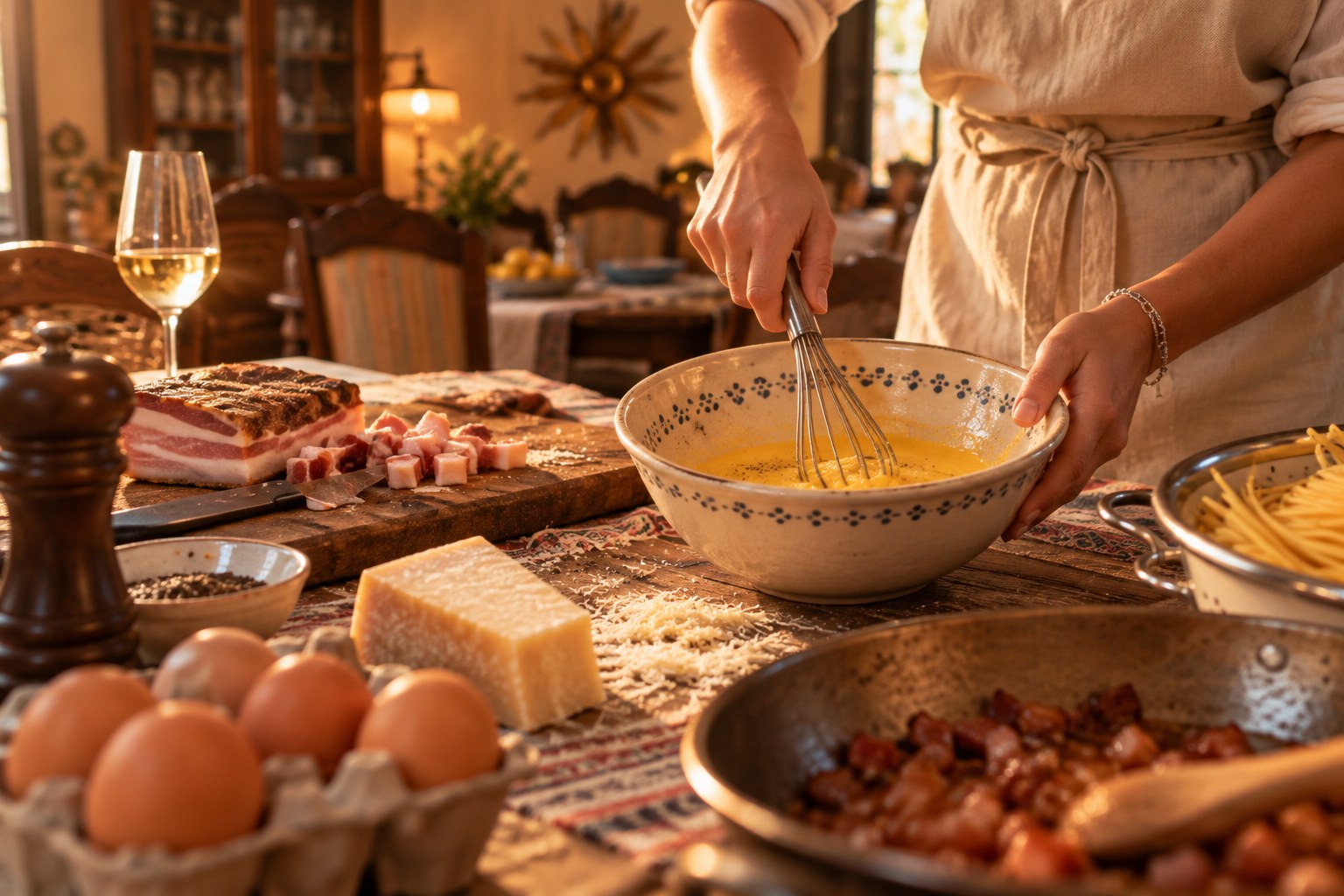
There is always a moment when carbonara becomes magic.
It doesn't happen when you boil the pasta. It doesn't happen when you grate the cheese. And it certainly doesn't require cream, butter or any other clever addition.
It happens in those few seconds when hot pasta meets eggs, Pecorino, pepper and the fat left behind by the guanciale.
Suddenly, five very simple ingredients become something greater than the sum of their parts.
In Rome, carbonara is like that: uncomplicated, generous and slightly unforgiving. Everyone has an opinion about it. Every family has its little ritual. And somehow, the best one is often the carbonara you remember eating around a crowded table, while somebody was talking too loudly and another person was already asking for seconds.
So forget bacon. Forget pancetta.
We start with guanciale.
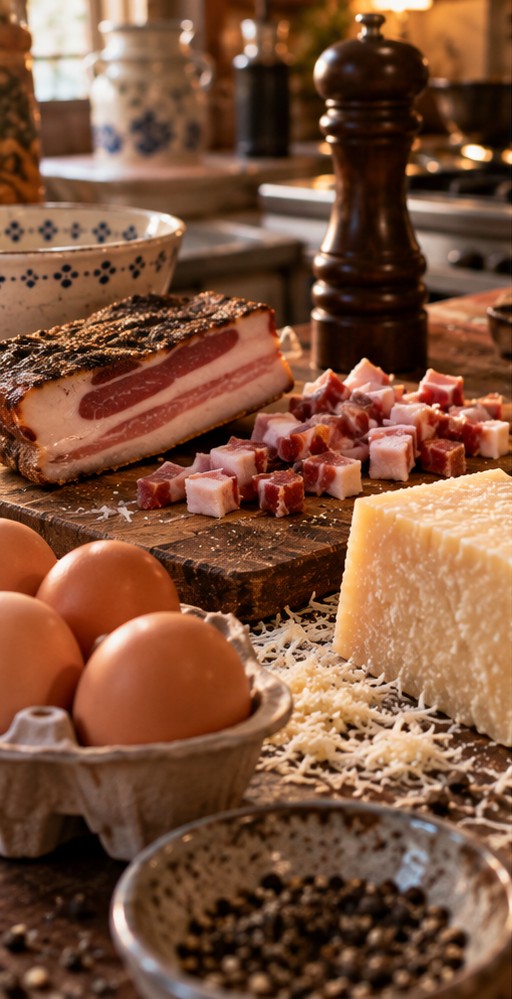
What you'll need
For each person
- 100 g pasta
- 1 egg yolk
- 35–40 g guanciale
- A generous amount of Pecorino Romano
- Freshly ground black pepper
And for every 4 people
- 1 additional whole egg
No cream. Ever.
The ritual
Cut the guanciale into strips or chunky pieces and place it in a cold pan.
Let it cook slowly.
There is no need for oil. The guanciale already has everything it needs.
As the fat begins to melt, the kitchen starts to smell unmistakably Roman. Let the guanciale become golden and crisp around the edges, then turn off the heat.
Meanwhile, bring a large pot of water to the boil. Salt it—but remember that both guanciale and Pecorino are already beautifully salty.
While the pasta cooks, prepare the heart of the carbonara.
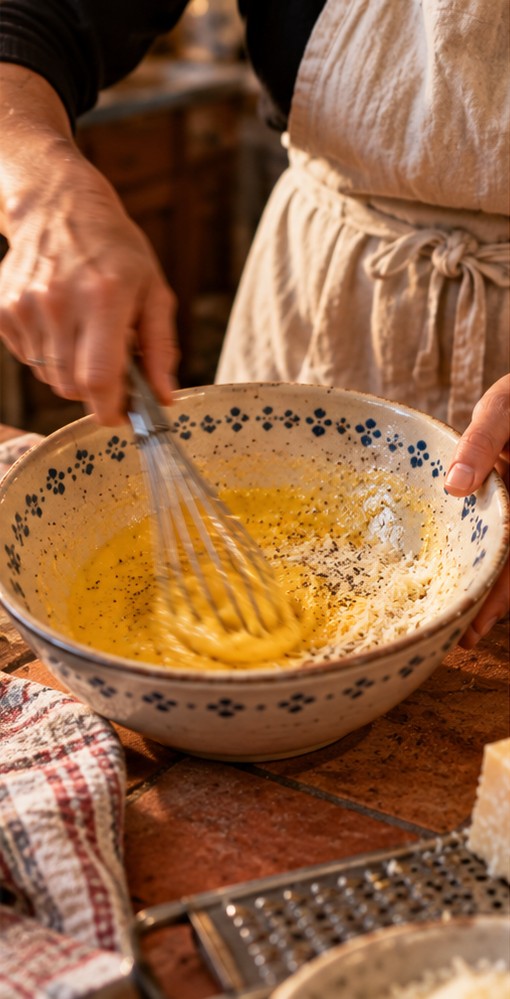
In a bowl, whisk one yolk per person, plus one whole egg for every four people.
Add plenty of finely grated Pecorino Romano and as much freshly ground black pepper as your heart tells you is reasonable.
Then add a little more pepper.
Mix until you have a thick, rich cream.
Cook the pasta until al dente. Properly al dente.
Before draining it, save a cup of the pasta water.
Now comes the only moment that really matters.
Add the pasta to the guanciale and toss it through that beautiful rendered fat.
Remove everything from direct heat.
Then add the egg and Pecorino mixture.
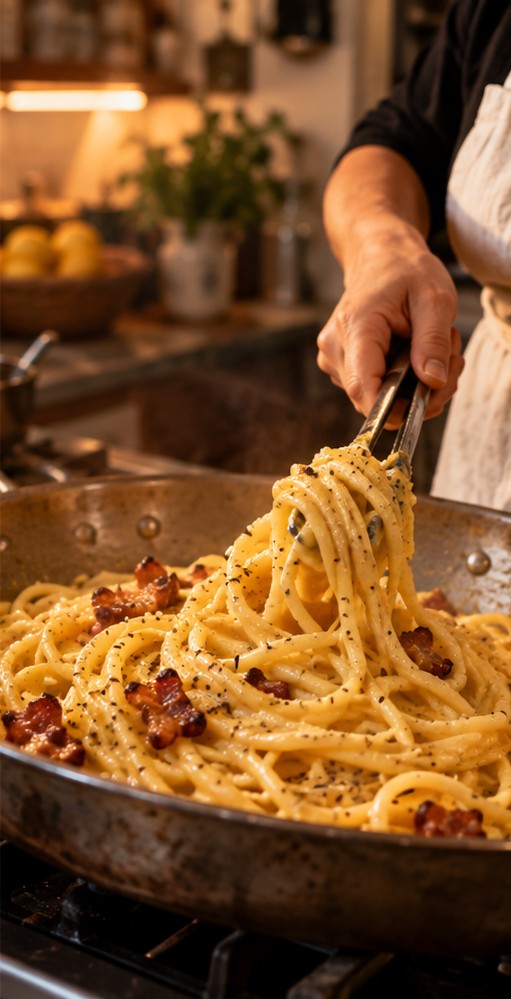
Toss. Stir. Move quickly.
Add a little pasta water if needed, just enough to transform the mixture into a silky sauce that clings to every strand of pasta.
The eggs must become creamy from the residual heat.
They must never become scrambled eggs.
Add the crispy guanciale.
More Pecorino.
More black pepper.
And stop.
That's it.
No decoration required. No reinterpretation necessary.
Just put it in the middle of the table while it's still hot.
Because carbonara doesn't like waiting.
And, usually, neither do the people around the table.
That's the magic.